Before You Go
Is China Safe to Visit?
Feel at ease, enjoy the everyday moments, and know where to turn if you need help.
For a typical city sightseeing trip, China is generally a safe destination. You can leave room for the small pleasures: an unhurried dinner, a walk by the river, or another stop for something sweet. Bring the everyday awareness you would use in any unfamiliar city, then give yourself time to enjoy being there.
On this page
Everyday Life, Up Close
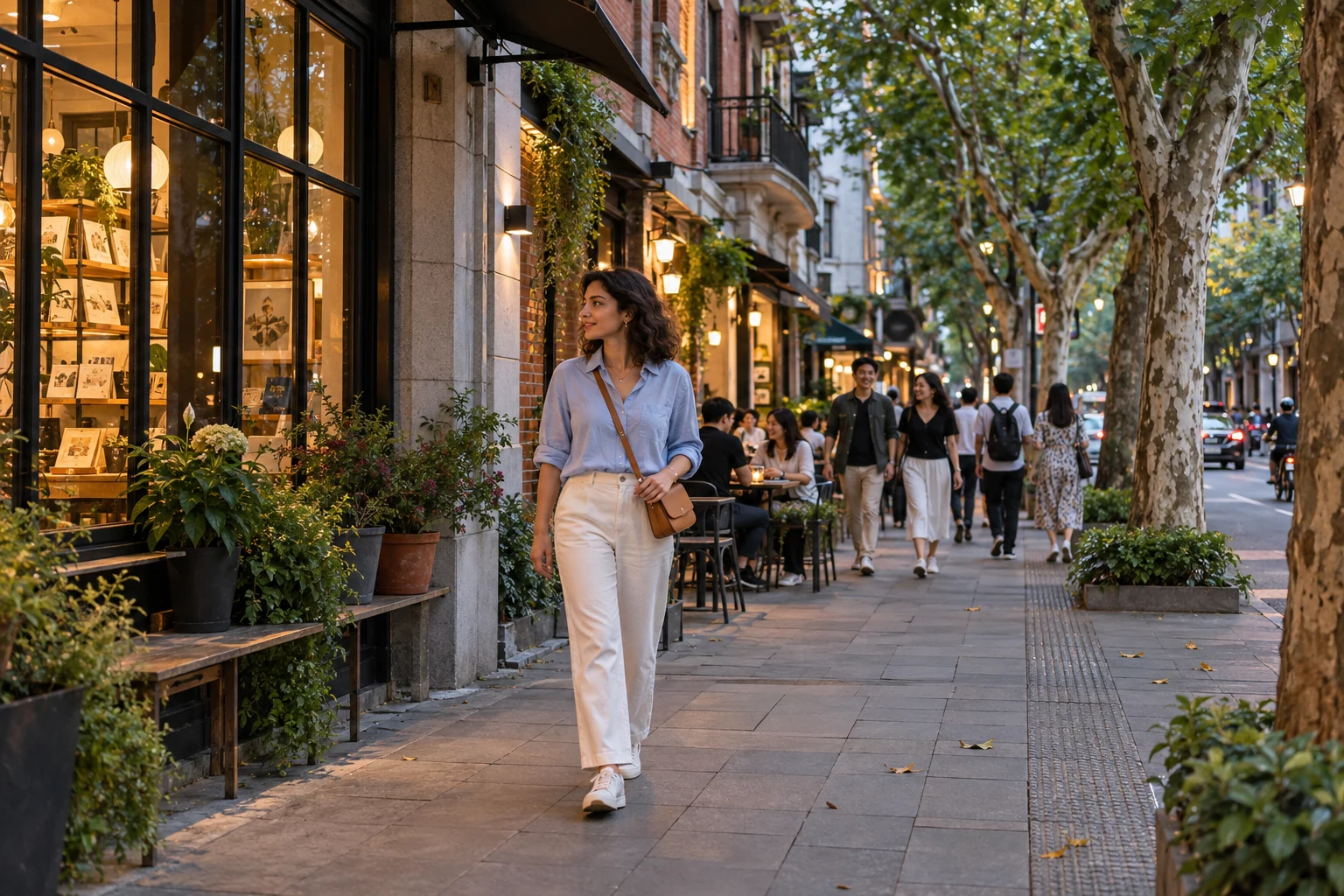
Some of the most memorable parts of a trip happen between the landmarks. A riverside path gives you somewhere to slow down; a neighborhood square offers a glimpse of life beyond your itinerary. Leave a little space for these ordinary moments.
Shanghai’s waterfront is a good example. Along the Huangpu River and Suzhou Creek, public spaces bring together walking routes, play areas and places for evening exercise. A stroll can become part sightseeing, part people-watching, with the city carrying on around you.
Choose a neighborhood you are curious about, stop when something catches your eye, and let an ordinary evening become part of the trip.
Sources:
What Helps Make Travel Feel Safe?
Public safety is part of the picture. China’s Ministry of Public Security reported further falls in criminal cases in the first half of 2026, including theft, robbery and fraud. Local policing also supports evening activity: in Hunan, patrol initiatives have focused on busy nightlife districts, stations and popular visitor spots.
Cameras provide a useful record. Public-space CCTV can help establish what happened after an accident, support an investigation, or provide clues when belongings go missing. If something happens, give staff or police the approximate time and location so they can check whether relevant footage is available.
Access to recordings is controlled. China’s public-security video rules require privacy safeguards and prohibit these cameras inside hotel guest rooms, toilets and changing rooms. These protections matter; they do not mean privacy risks disappear. Footage may help resolve an incident, but recovery of lost items is never guaranteed.
Enjoy the City After Dark
In cities such as Chengdu and Changsha, a night out can be a relaxed continuation of the day. Their popular evening districts bring people together for food, music, shopping and walks, giving you plenty of reasons to linger after dinner.
In Chengdu, the Jinjiang riverfront connects evening boat rides with places to eat, browse and enjoy the waterfront. Changsha has its own energetic rhythm: night-market food, live performances and pedestrian streets where visitors gather to wander and take photographs.
That activity can make an unfamiliar neighborhood feel more approachable. Choose lively, well-lit streets, and keep your hotel’s Chinese address and return transport in mind. The atmosphere varies by neighborhood and hour; the busiest entertainment streets are the useful starting point.
For Women Travelling Independently
For women exploring on their own, being able to enjoy an evening at their own pace can be a meaningful part of the trip. A Spanish visitor featured in a 2026 CCTV News report described feeling comfortable walking alone after 11 pm—one personal account of the ease that visitors can experience.
Busy dining streets and established evening promenades offer an inviting starting point. Pick surroundings you feel comfortable in and arrange a straightforward journey back. Keep the usual care with belongings, drinks and transport, while leaving room to enjoy the evening.
If You Need a Hand
Feeling unwell? For non-urgent care, ask your hotel for help finding a hospital and check payment arrangements with the hospital or insurer. In an emergency, seek help immediately.
Lost something important? Contact the venue or transport provider’s official lost-property service. For theft, contact police. If your passport is missing, report it to police, ask the local exit-entry authority about a loss certificate, and contact your embassy or consulate. Confirm the immigration formalities needed before onward travel.
Sources & editorial notes
Reviewed on 24 October 2026. This guide focuses on mainland city sightseeing. Crime figures describe police-recorded cases; visitor accounts describe individual experiences. The linked sources also cover city nightlife, camera safeguards and emergency help.
- Guide to Working and Living in China: emergency help — Ministry of Commerce, published on the State Council website
- Lost Passport — National Immigration Administration
- Practical personal and nighttime travel precautions — Jiangmen Public Security Bureau (in Chinese)
- Medical Guide for Foreigners in Beijing: payment methods — Beijing Municipal Government international medical guide
- China sees further gains in public safety as criminal cases fall — State Council Information Office / Xinhua, reporting the Ministry of Public Security
- Shanghai by Night: Riverside Walks, Family Spaces and Evening Exercise — Shanghai Municipal Administration of Culture and Tourism (in Chinese)
- Public Security Video Image Information System Management Regulations — State Council Order No. 799, reproduced by the Ministry of Ecology and Environment (in Chinese)
- Evening Activities Along Chengdu’s Jinjiang River — Sichuan Daily / Chuanguan News, reporting on the Jinjiang waterfront (in Chinese)
- Diverse Modes of Business Contribute to Nighttime Economic Vitality in Changsha — Hunan Provincial Government / Xinhua
- Visitors Describe Their Sense of Safety in China — CCTV News, reproduced by CRI Online (in Chinese)
- Hunan Police Support Safety in Nightlife Districts — Hunan Provincial Public Security Department (in Chinese)
Sources by section and question
- Everyday Life, Up Close — Source 6
- What Helps Make Travel Feel Safe? — Source 5, Source 11, Source 7
- Enjoy the City After Dark — Source 8, Source 9, Source 3
- For Women Travelling Independently — Source 10, Source 3
- If You Need a Hand — Source 1, Source 2, Source 4
- Emergency Numbers in Mainland China — Source 1