Shopping
Souvenirs & Gifts in China: What to Bring Home
Find small keepsakes, useful gifts and a few things to enjoy long after the trip.
Some purchases make more sense after you have spent a few days in a place. A pattern on a museum display becomes familiar. You discover a tea you would like to drink again. A little ceramic bowl makes you think of breakfast at home.
On this page
That is a good way to approach souvenir shopping in China: leave a little room to discover what catches your attention. A postcard, a fan or a single cup can bring back a particular afternoon without taking over your suitcase.
Museum & City Keepsakes
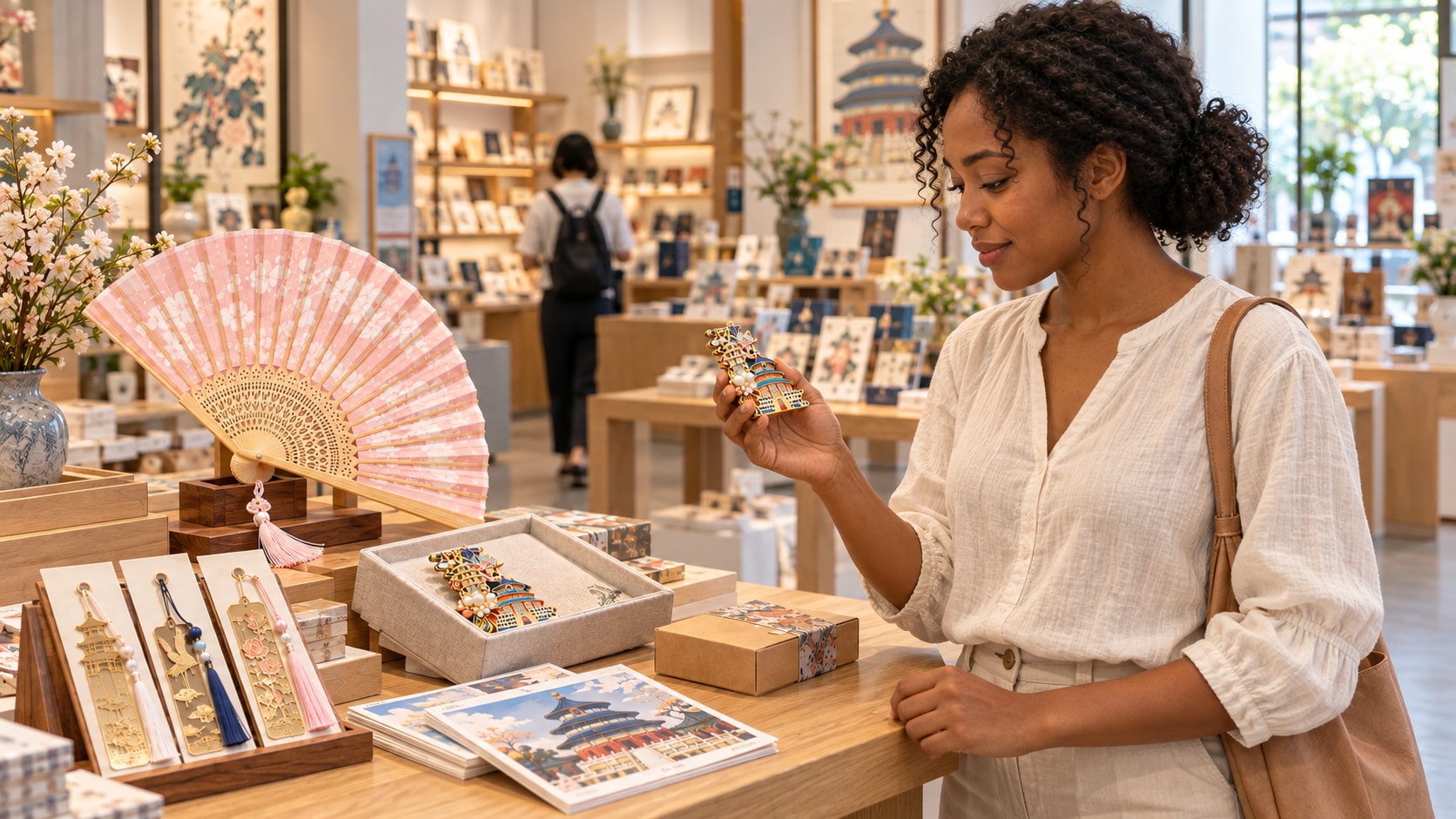
Museum shops are an easy place to begin. After looking at the collections, you have a reason to notice the details on a bookmark or a tote bag. A familiar shape or colour can make a simple object feel connected to somewhere you have actually been.
Beijing’s Palace Museum, for example, has developed fans, fridge magnets and pocket mirrors using motifs from its collection. Shanghai souvenir designs have included magnets inspired by the Museum of Art Pudong’s architecture.
Choose a design you would enjoy seeing at home. A magnet can be playful; a postcard can be framed; a bookmark can slip into a book you are giving someone. Remembering what caught your eye makes the gift easier to explain, too.
Tea to Enjoy at Home
Tea becomes a more personal gift when you have tasted it. If a shop offers a tasting, try a small amount and notice what you enjoy: a fresh aroma, a gentle roasted flavour, or simply a cup you would happily drink every day. You do not need to become a tea expert.
Longjing, also known as Dragon Well, is a green tea associated with Hangzhou. It can give a purchase a connection to the place, especially if Hangzhou is part of your trip.
For someone new to tea, a small pack with clear brewing instructions is a thoughtful starting point. A label or a photo of the tea’s name will also make it easier to find again.
Ceramics for Everyday Use
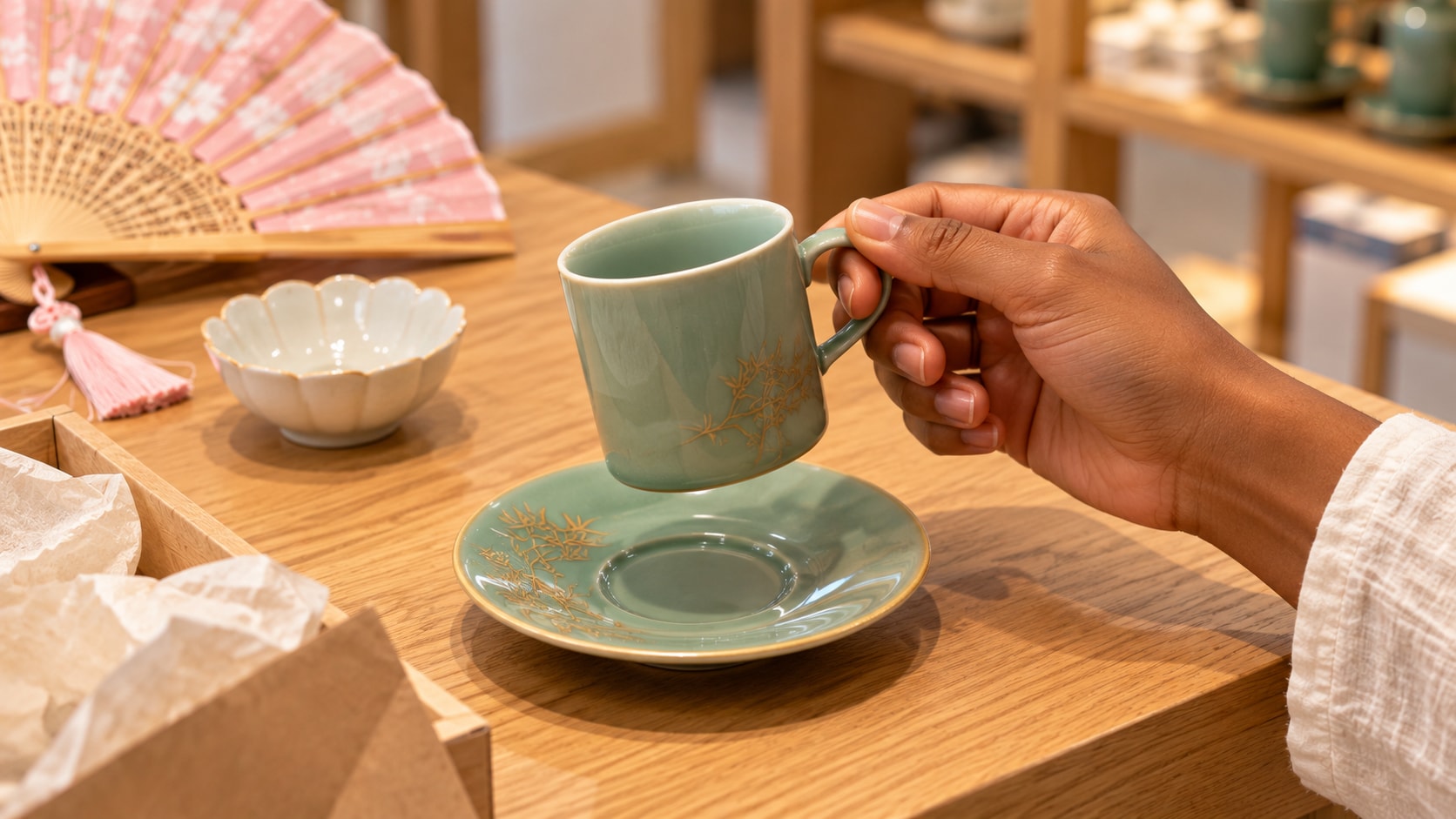
Start with something you can picture using: a cup for your morning drink, a little bowl for snacks, or a plate that looks good on the table. Pick it up, if the shop allows, and see how it feels. The weight, rim and handle matter as much as the glaze.
In Jingdezhen, Taoxichuan has transformed a former porcelain factory site into a district with exhibitions, shops and a creative market. It is one example of a place where looking at ceramics can become part of the day’s outing.
A single piece gives you time to choose. You might prefer a quiet, simple shape or a textured glaze; the most useful choice is one you can imagine reaching for at home.
Fans, Scarves & Small Accessories
A folding fan is satisfying to browse in person: open it, see how the picture sits across the folds, and try the movement in your hand. Scarves, pouches and small fabric accessories offer a different kind of choice, with colours and patterns that can fit into someone’s everyday wardrobe.
These designs can be contemporary as well as traditional. Shanghai’s 2024 city-gift selection, for instance, included scarves and clips developed by Shanghai Natural History Museum and a local department store.
For a gift, think about the person wearing or carrying it. A colour they already love may be more welcome than the most elaborate design in the shop.
Where to Browse
Let shopping fit around the places you are already visiting. Look into the museum shop after an exhibition, stop at a ceramics studio on a slow afternoon, or leave time for a few independent shops along a street.
Our Shopping Malls guide is useful if you want to browse brands and shops in one place; Markets & Shopping Streets explores weekend stalls and smaller shopping streets. You can enjoy the browsing even when nothing comes home with you.
Before You Pack
Before paying, check the final price, what the item is made from and how it will be packed. For a cup or bowl you plan to eat from, confirm that it is intended for food use. For silk, read the fibre label. Ask for protective packaging for anything fragile, and keep receipts and product labels.
For tea, food or souvenirs made from plant or animal materials, check the customs and biosecurity rules for the country you will enter. Follow any declaration requirements; sealed packaging alone does not guarantee entry. The US and Australian guidance in the sources are useful starting points for travellers heading there.
Sources & Updates
Reviewed on 25 October 2026. Museum and city-gift examples illustrate designs rather than current stock. Shop stock and opening hours may change. Check destination customs and biosecurity guidance before travelling; the US and Australian sources apply to those destinations. Suggestions about choosing gifts are CTN editorial guidance.
- Palace Museum Cultural and Creative Products — The Palace Museum (in Chinese). Checked 25 October 2026.
- Shanghai unveils 12 new gifts — International Services Shanghai / Shanghai Municipal Administration of Culture and Tourism. Source date: 26 September 2024. Checked 25 October 2026.
- West Lake Longjing tea picking season begins — Hangzhou Government English Portal. Source date: 17 March 2025. Checked 25 October 2026.
- Taoxichuan Cultural and Creative District — Jingdezhen Municipal People’s Government (in Chinese). Source date: 24 November 2023. Checked 25 October 2026.
- International Traveler: Coffee, Teas, Honey, Nuts, and Spices — USDA Animal and Plant Health Inspection Service (APHIS). Source last updated: 13 January 2026. Checked 25 October 2026.
- Bringing or mailing goods to Australia — Australian Department of Agriculture, Fisheries and Forestry. Checked 25 October 2026.
Sources by section and question